Wednesday, May 8, 2013

Frustrated Vegetable Lover

Dear Restaurants, 

I have a serious beef with many of you. It seems as though you are ignoring the salad course. You treat it like an after thought rather than an important component of your menu. You skimp on ingredients and try to plate it as cheaply and unimaginatively as possible. 

First of all, iceberg lettuce in a bowl with a slice of cucumber and a packaged dressing is not a salad. In fact, we should basically call it hydrating as iceberg lettuce is made up of almost entirely water. That being said, I like iceberg lettuce. In fact I use it sometimes on sandwiches because it gives good crunch. Just don't call it a salad. 

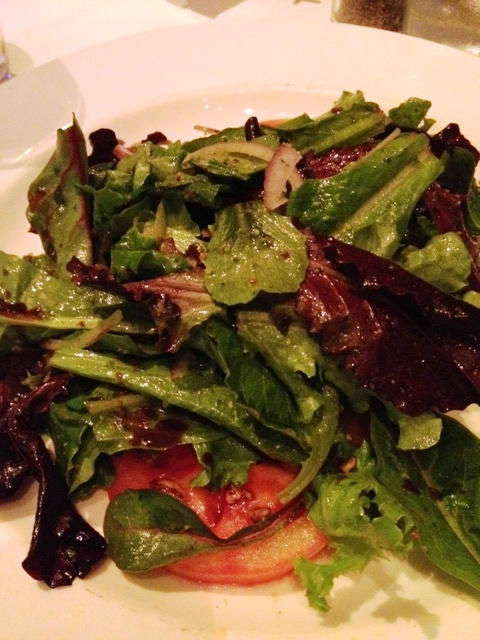
Second, please stop drowning your greens in dressing. I don't care how great your house dressing is. If you totally submerge the greens in it, the greens are overwhelmed and no longer crunchy. You might as well drink a vinaigrette soup. 

Third, please add some pizzazz to your salads. Even if it is just some nuts and maybe a fruit of some kind, give me something besides just greens. 

Next, a salad should not be limited to just greens with toppings. Any vegetable can be turned into a salad. If there is anything I have learned from the Mediterranean cultures of the world, it is that salads are as varied and individual as people are. You can have hot salads, cold salads, creamy dressings, light vinaigrettes, arranged salads, tossed salads, you name it. There is no boundary. Some of my favorite salads in fact don't even have greens in them. Asparagus, roasted beets, brussel sprouts, roasted peppers, eggplant, radishes, oranges, you name it, they make great salads. 

Also, if you use cheese on a salad, please make it delicious cheese. I don't even necessarily mean make it yourself, just make sure it is a star. The salty and fatty composition of the cheese is intended to accentuate the greens and complement them, not overwhelm them. And by all means, please no processed impostor posing as cheese. 

Finally, I applaud the fact that there are a myriad of "baby greens" mixes that are now commercially available. And I'm ecstatic that restaurants use them. But don't forget, there are a ton of other spectacular options out there that many don't even know about that can accentuate your salad, like arugula, radicchio, claytonia, beet greens, radish greens and baby kale. These are not only delicious in flavor, but many offer super health benefits. Incorporating them into salads is one of the best ways to sneak them in and kick up the nutritional value of your salad. 

Call me kooky but when I get a great salad, it can be the highlight of a meal for me. To me the ultimate test of a chef isn't if they can prepare a good steak or grill a chicken breast. That involves nothing more than proper temperature and knowing when to pull the meat off. The true test of a chef is how they can transform a vegetable into something fantastic and one of the best arenas for this kind of artistic expression is in the salad department. 

P.S. Battering and frying said vegetables doesn't count. 

Sincerely, 

Frustrated Vegetable Lover 


Tuesday, April 9, 2013

Women Chefs: Inequality in the Kitchen

Much as been made about women's equality of late, including equal pay for equal work. In a society that has supposedly made great strides in gender equality, there remains a lot of work to be done in truly insuring said equality. One of the areas that seems to be highly reflective of this gender inequality is that of the culinary world. I'm not talking about celebrity chefs and bloggers. I'm talking about actual chefs, who own their own restaurants and who gain international acclaim for their restaurants.

Every year various publications come out with their lists of favorite restaurants and chefs. Bon Appetit, Food and Wine, James Beard, Zagat, the list goes on and on. I always peruse these lists to see which restaurants I would like to add to my bucket list. Each time I read through the nominees I am struck by how few women they select. There may be a couple of token females, but the vast majority of those on the lists are men.

I started thinking about this a couple of weeks ago and two questions came to mind. One. Is the lack of female recognition some kind of bias against females in the industry? Or, two. Are there just so few women at the helm of great restaurants that by sheer numbers they cannot compete? Either way, something is wrong with the picture.

Consider these facts. According to some recent articles on the matter, women represent approximately 50% of those enrolled in culinary schools. They are outnumbered in regular culinary programs by men but in the baking department they make up almost 80% of those enrolled. So the trouble does not lie in the number of those who are actively seeking to find careers in the field of culinary arts. While numbers vary, several sources state that only approximately 15% of executive chefs of independent restaurants are women. That is an alarmingly low number.

It has been suggested that many of those women who graduate from culinary schools end up working at chain restaurants or hotels and some end up not pursuing careers in the food industry at all. The typical response to the question of why seems to be the same one plaguing other industries that seem to have a bias against women. First, women end up quitting to start families and they cannot be pregnant or mothers and maintain a full time job. While I get that chefs work long hard hours, this supposes that most women decide to have families and are thereby automatically discriminated against. Not so. More and more women today are opting to not get married and are starting families later or not at all so that they can pursue careers.

A second common response is that women are somehow physically inferior to men and incapable of hacking the long hours, heat and physical labor necessary to be a chef. That's kind of like saying women aren't capable of becoming good soldiers because they are weaker than men are. That makes absolutely no sense. Many women are not only as physically fit as men, but are often more capable of multi-tasking than men, which would make them excellent candidates for running a restaurant. To that notion, I cry foul.

Thirdly, women are routinely harassed in the context of the kitchen so some feel as though there is no place for them there or they will be treated poorly. Again, that's the same logic that says women are dangerous because they cause men to behave badly. A completely reverse argument that has no merit. Why can't men learn to behave like decent human beings and treat women with the equal respect they deserve? For this I blame men, not women, and we shouldn't suffer because of it. I say, grow up men. Disclaimer: I am happily married to a wonderful man who is very respectful of women and am quite aware that not all men fall into this category of behavior. I am just generalizing.

Historically there has also been a bias between the public and private arenas of the kitchen. Within the home, the kitchen is often considered to be the woman's domain. Women in many cultures for centuries prepared the food for their families and passed their recipes down from one generation to the next. In the mid-1900's, however, women increasingly got out of the kitchen and pursued jobs outside the house, freeing themselves from the private domain. It makes sense, therefore, that they should also seek to take those very skills that suited them so well in the private domain and utilize them in the public domain.

The hitch in that giddy up is that the formal restaurant structure that goes all the way back to Marie-Antoine Careme in 1800's France was built around men and haute cuisine has historically been a man's world. This has persisted into 20th and 21st century Europe and America with few exceptions. Strong women like Alice Waters and Susan Feniger have succeeded despite the bias, mostly because they were able to distinguish themselves as something completely unique and new in the industry as a whole.

I don't know what the solution is, nor do I think I am going to change it, but it certainly is indicative of something that we all sense in the society as a whole. I am proud to have my small place in the industry and to represent the minority as a woman who runs her own kitchen. I hope that at some point there will be more equity in the culinary world as with the world at large. Perhaps sometime in my lifetime.


Tuesday, March 19, 2013

Not All Caprese Salads Are The Same

I just returned from a week long trip to Vegas and while there I noticed a trend. Just about every restaurant I went to served a version of a Mozzarella Caprese salad from the more casual spots to higher end places like Valentino's and Gallagher's. My friend and I are caprese junkies so we decided to conduct a very professional survey of the array of capreses we found. I won't lie, we ate them all, but some were indeed superior to others and there are two main factors to that, the quality of the mozzarella and the quality of the tomatoes. It is a very basic salad really and you can jazz it up in various ways with garnishes like pesto and olives, but at its heart it is a showcase for fantastic fresh mozzarella and perfectly sweet, ripe tomatoes. 


First, fresh tomatoes. This salad really is best in the peak of the summer when you have an array of fresh tomatoes of all kinds and colors. In general I'm not a fan of using simple slicing tomatoes for this salad. They don't have as much flavor as some of the more exotic heirloom varietals such as green and red zebra. They are also more watery. I like tomatoes that have a meaty quality, not a mushy one.


Next, fresh mozzarella. It really isn't that difficult to make yourself. You simply need good quality milk, preferably organic and preferably not ultra-pasteurized. You can purchase a kit that has salt, citric acid and rennet in tiny tablets from www.cheesemaking.com. It's fun and the flavor simply cannot be beat. The only hitch in the giddy up is that you cannot do anything else while making cheese. It is time and temperature sensitive and if you don't pay attention, it won't work. And the whey left behind from the mozzarella process is super healthy for your furrbabies!


Without naming names, I'll share photos of the salads we had. This one was actually one of the more basic ones. Store bought mozzarella, pretty unripe tomatoes and the balsamic was a glaze, not a high quality balsamic vinegar or a reduction. The glazes are made with corn syrup which is totally over powering and makes it have a sickeningly sweet flavor. The olive oil, however, was a wonderful, fruity olive oil which was the best we had. And the delicate basil leaves were lovely.


This one was actually one of the better ones as far as the tomatoes were concerned. They were ripe and there were multiple varieties. The mozzarella again was store bought and I didn't care for all the raw onion on top but considering the rest of the meal we had at that restaurant, this was definitely the highlight. Again, it used a balsamic glaze which I did not like but they made a basil oil instead of fresh basil on top which was quite nice.


This was my least favorite. The greens on top totally masked the tomato and mozzarella. It was a lovely salad, but not a true caprese. The tomatoes were very under ripe and the mozzarella was just ok. No basil, no balsamic. There is such a thing as too much of a garnish. 


This final one was the best. Ripe tomatoes, fresh burratta mozzarella made in house and it was not overly garnished. Again, they used the glaze but it was wasn't over powering because it was used sparsely. The olive oil was fruity and they had a delicious sea salt on top that accented the creamy mozzarella beautifully. 


This final photo is of a caprese I made last summer using fresh tomatoes from the farm and fresh basil from our garden. It was delicious, beautiful and took advantage of the delicate fresh mozzarella I made.  And you will notice the balsamic on top was not a syrupy glaze, but rather a delicate drizzle of a reduction I made. Just the way I like it.

Tuesday, January 29, 2013

Internal Culinary Conflict

I have a confession to make. I am internally conflicted. Not a conflict of character or some moral dilemma, although there are aspects of that to my confliction. My conflict resides in an obsessive fascination with molecular gastronomy while simultaneously disdaining it. I read articles and watch videos about Grant Achatz and Ferran Adria in excess and I am always seeking to try restaurants that are pushing the envelope and offering unique taster menus that I can try. Yet, there is a fundamental issue I have with most of the basic tenets of this kind of culinary artistry, particularly as it pertains to what I do and how I have defined myself as a chef.

Much of my interest and education in cooking has revolved around being true to culture. Finding spices, ingredients and techniques that somehow represent a group of people and bringing them to my little corner of the world. Food as education. Food as cultural exchange. Generally this food tends to be more rustic, simplistic, yet elegant and always focused upon the ingredients being utilized. I have sought out farmers whom I have built a relationship with to provide me with the fresh ingredients that are the basis of my cuisine. Meat, eggs, vegetables, spices, all the necessary components of my culinary artists palate so to speak.

I also have cultivated a theory of food that is very much centered on taking chemicals and processing out of the equation. Eliminating unecessary ingredients that may pose a health risk or simply adulterate the natural quality of the food I am creating. I go out of my way to spend quite a bit of money on these ingredients, using organically grown, sustainable products where I can.

Yet, the use of various chemicals in the culinary laboratory that has been the foundation of molecular gastronomy intrigues me. The ability to morph a food into something it is not, yet maintaining the essence of flavor of that ingredient so as to create a transformative experience for a diner is something beyond cooking. It is part mad scientist, part modern artist. The dancer in me, the artist in me, craves that kind of freedom. The academic in me pulls me in the other direction, telling me to maintain the dignity of the ingredients, the history, the culture.

Where then do I fit in as part artist, part academic?? I did not come to cooking from a traditional background. I came to it from a history of both artist and student. First a dancer, then an anthropologist interested in culinary anthropology. Food for me represented the transition between the two and an opportunity to fuse both my loves. As I have evolved I think much of my cooking has gone beyond the cerebral and is now returning to the more intuitive but there remains an evolution between the two that still eludes me.

Perhaps that is what constantly pushes me to create new recipes and do new things. This constant conflict I feel. As others inspire me, as new ingredients come my way, I am attempting to make sense of my conflict and trying to formulate a new normal for myself. I guess with that being said than I have come to what my true New Year's Resolution is, albeit an month late. Find the resolution to the conflict. Create the amalgamation between the cerebral and the intuitive, between academic and artist. Stop beating yourself up for wanting to try new techniques that may involve adding chemicals to your food. Don't allow yourself to be pigeon holed by some unattainable and unsustainable ideology.

I am a chef. I am an anthropologist. I can be both and that doesn't mean compromising my ideals or my "culinary morals." I guess it is like discovering a new faith. Somewhere underneath it all exists a kind of culinary spirituality but my culinary truth cannot follow a specific dogma or church of worship. I have to find the faith within my own self and manifest it within my own personal expression.


Saturday, January 12, 2013

Tyranny Or Just a New Business Model?

When Jeff and I lived in Las Vegas, one of our favorite forms of entertainment on a night off was to go to a high end restaurant, ask for the chef's taster menu and not even look at the menu. We'd spend hours there, enjoying whatever it was they put in front of us, experiencing new flavors and foods we had never tasted before and overall participating in a culinary theatrical experience that titillated our every sense. In some ways I considered this to be my culinary awakening, my education of sorts in the world of food and flavors. We visited a myriad of restaurants from famous chefs like Commander's Palace, Robuchon's, Picasso and more. Since then we have continued this form of entertainment and virtually every trip we take revolves around finding a restaurant with this type of menu where we can submit ourselves to the creative whims of a chef and allow them to take us on a culinary journey. We find this kind of dining fun, inspirational and tremendously stimulating, as I suspect a vast many people do or they would not have perpetuated as they have.

In a recent article in Vanity Fair written by Corby Kummer entitled Tyranny-It's What's For Dinner, however, this type of taster menu is scrutinized as being over the top, arrogant and completely void of the desires and needs of the customer. Kummer states:

"Mercy is a rare commodity at restaurants like this, where the diner is essentially strapped into a chair and expected to be enraptured for a minimum of three and often four and five hours, and to consume dozens of dishes. Choice, changes, selective omissions—control, really, over any part of an inevitably very expensive experience—are not an option. "


While I appreciate the argument and think it perhaps has some validity on certain occasions, I have to disagree that there isn't a place for it in this current culinary landscape. Chefs like Thomas Keller of the French Laundry and Grant Achatz of Alinea and Next have elevated food to an art form and a scientific experience unlike any other. They represent the best of the movement known as Molecular Gastronomy, a movement which began with the genius of Ferran Adria at the now closed El Bulli in Spain. There is a time and a place for it and as long as the diner knows what they are getting themselves into, there is absolutely nothing wrong with the long, drawn out saga of a 20-40 course dinner. 


Do some chefs abuse the system for the sake of fitting into a mold they perceive to be the "in thing" without the purpose of exploring new territory scientifically and new flavors? Yes. There are many "celebrity chefs" that are just that, celebrities. Their food isn't exactly overwhelming, the service nothing spectacular, yet they are able to capitalize on their celebrity by presenting inferior food at their restaurants. These aren't the places I look to when we are planning our getaways. They also aren't the places I have sought to emulate in my own restaurant. 

My number one focus is on flavor and on presenting fresh, local food without too much fanfare. I am not interested in making foams and hollow shells of shrimp juice with edible seaweed balls in the center. The number one most important aspect of my cooking is in my use of spices, which I apply carefully to accentuate the natural flavor of foods. I often say that I spend way too much money on organic meat, eggs and produce to then inject them with a bunch of chemicals to turn them into something they are not. I prefer to keep things elegant, but simple. 


I do however like the notion and experience of a chef's taster menu where it is up to the chef to be creative and produce a menu reflective of their personality and individuality. I see food and cooking as an art form, not as a science experiment. I don't want frankenfoods, I want real meat, real eggs and real fruits/vegetables that are recognizable at least in some form or another. To me cooking is a symbiotic relationship between those who grow the food, those who prepare it, and those who consume it. In essence the chef is the mediator between the earth and the body, transforming raw material into energy and hopefully pleasure of the senses. 


Food to me also represents a unique opportunity to educate people about other cultures and new flavors. Everyone on the planet has to eat and in many ways, food is the safest medium within which to explore other cultures without invoking religion, politics or other more volatile topics. And as a cultural anthropologist by training, this aspect of food is perhaps the most interesting part of cooking. I have the unique opportunity at every meal to be a chef anthroplogist, creating foods that are in some way representative of an entire group of people. I'm somewhat of a foodie geek in that regards. If there is a show or a cookbook that can meld these two topics together, I'm all the more interested in it. 


There is another value to serving a taster menu with just one option per night and that is economics. The restaurant industry is perhaps the highest risk industry out there. Restaurants fail at epic rates and the two biggest factors in that are overstaffing/understaffing and food waste. By keeping the menu simple and only serving those who have reservations, we have virtually eliminated both of these pitfalls. And many restaurants are following suit. It has less to do with not wanting to cater to the customers desires than simply a matter of survival. 


That being said, myself and many other chefs are perfectly willing to make adjustments accordingly for dietary restrictions. Few of us are culinary Nazis in the vein of what Kummer describes in this article. If I have someone coming who is a vegetarian and I had planned a beef entree, I am more than happy to come up with an alternative for that individual. Again, this makes good business sense. The more people you can accommodate, the higher your profit margin and the more likely you'll get repeat business. 


I will say, however, that I am less apt to accommodate someones "dislikes" and I have a sound reason for doing so. Most people who claim to dislike a food have either never had it before and just think they dislike it, or they only had it when they were kids and have been afraid to try it since. I always say, if I didn't like something, it probably wasn't prepared properly and I'm willing to give it a second or even third chance. By not offering people a choice or a way out of tasting something they don't think they'll like, you force them to be adventurous and break out of their comfort zone. More often than not I end up hearing from guests that they didn't think they'd like something but that they loved it. Those who dine with us do so knowing that they are going to be in for a slightly unique experience and see it as an opportunity to take a little culinary adventure. There are plenty of places that serve what they know and if that's what they want, they can go there. 


Finally, I would argue that this new kind of celebrity chef driven scientifically engineered menu is a natural evolution that reflects the current society at large. We live in a world that values celebrity. Our 24 hour news cycle is filled with what I call pseudo-news of celebrities doing ordinary things and people feed off of this kind of news. We also live in a world that increasingly values technological advancement and it is no surprise that this trickles down to the most basic of human needs, namely food. And lastly, we live in a world that is increasingly food centric. The fact that food television is as popular as it is and that reality tv shows like Top Chef and Kitchen Nightmares are as prevalent as they are has created an entire generation of food savvy individuals who are already quite sophisticated in their food knowledge at a very young age. Chefs are therefore challenged to create things that are new and exciting for this generation of diners who I would argue have a somewhat short attention spans and need a little bit of in your face food creativity. 


In the end it remains to be seen if we will eventually fatigue of this current trend and get back to basics or not. I already see the trend heading that direction with more and more farm to table restaurants popping up and the slow food movement growing in waves. Which style of restaurant will be sustainable? I'm not sure. Part of that will be dictated by economics and the ability of people to have the kind of expendable income needed to partake of these $300 and $400 taster menus. I suspect the two will continue to evolve alongside one another, offering an outlet for all kinds of diners of all demographics and socio-economic situations. I think that in many ways we are at the forefront of that evolution by combining the back to basics approach with the taster menu approach but at a much more affordable price that anyone can participate in. 


Friday, November 30, 2012

Thinking of Becoming an Innkeeper?


Here is some food for thought, in this case, no pun intended. First ask yourself why you want to be an innkeeper. If you think it would be fun, it is. If you think it’ll be an easy retirement job that will make some extra money? Think again. Innkeeping is not only a full time job but a full time commitment. It involves working holidays, weekends and basically all those days that others generally have off. You are on call 24 hours a day, 7 days a week, and the physical labor is often grueling. Next, you should ask  yourself if you are a people person. Do you enjoy entertaining? Are you ok with people touching and looking through your personal items? If so, innkeeping is for you.
Keep in mind that if you believe that starting up a bed and breakfast sounds like a lucrative investment, it isn’t. You will never become rich as an innkeeper. But, you will have wonderful times, be an entrepreneur and be self employed. This comes with a lot of perks and a lot of downfalls, biggest one being the lack of benefits which come with a normal 9 to 5 job. If you are smart, you’ll diversify, as most bed and breakfasts do. Maybe you’ll serve meals, maybe you’ll do cooking classes and you will likely want to sell some retail. All of these will contribute to your bottom line, but not by much. Innkeeping is ultimately a lifestyle choice and one that can be tremendously rewarding.


Before you begin, make sure you have written yourself a very clear and detailed business plan. You should be absolutely certain of your finances. Know what you can afford before you start looking because banks don’t understand innkeeping as an industry and getting a loan is a tremendous challenge. Then, estimate your expenses at about 20% more because even if you purchase an existing property, which you should, you will likely end up with hidden expenses you didn’t anticipate ranging from home improvements to marketing. With regards to getting an existing property, there are pros and cons to that. A newly built facility, whether from the ground up or taking an existing property and building to suit, is great because you can get exactly the amenities and floor plan you want. However, a very serious pitfall often encountered by would be innkeepers is zoning. You cannot apply for zoning to become a bed and breakfast until you own a property and if your request is denied, you are stuck with a property you bought with the intent of turning it into a business and cannot do anything with it. We have known several innkeeper friends who spent months fighting their county boards and thousands in legal fees trying to get their inns zoned properly.


Next thing to consider is location. Where do you want to be in terms of potential business? Keep the following factors in mind. It always helps to be near a major thoroughfare, such as a highway, so that people can reach you easily. Secondly, being near things to do is helpful, for example shopping, outdoor activities, historical sites, wineries. Your guests will want a reason to come see you. Third, having a significant population within a two to three hour drive is a must. If you are more remote than that you will have a tough time drawing an audience. People who frequent inns tend to keep their searches to within a two to three hour drive.


Finally, you should consider the amenities you want to offer. What will set you apart? What is your identity as a bed and breakfast? Are you a foodies destination? Are you going to try to capture a market focused on hunting and fishing? Do you want to have a winery attached to your property? There are an infinite number of approaches you can take, all of which will determine what kind of marketing you will undertake which is probably the single most important aspect to getting into this business. Marketing has become an almost full time job in and of itself. Having an action plan and understanding your avenues of promoting yourself will make the difference between success and failure within the first year.


There are a number of fantastic resources available to aspiring innkeepers. Most state organizations offer training programs and several properties do weekend seminars for would be innkeepers. Additionally, there are many books are out there for aspiring innkeepers that offer more expanded versions of what I outlined here that are fantastic reference sources. One of my personal favorites is Mary White’s “Running a Bed and Breakfast For Dummies.” Hers was one of the few books that set a positive tone, encouraging future innkeepers to jump into this endeavor rather than discouraging them or scaring them away with all kinds of fear mongering as some of the other books did. Mary is the founder of Bnbfinder.com, is a leader in the industry in terms of advocacy for inns and a regular contributor to numerous publications on the subject of innkeeping. Above all, ask questions. Innkeepers are a friendly bunch and will gladly discuss their industry with you. Pick their brains and you will glean great insight into the many different approaches that have worked and not worked. 

Wednesday, October 31, 2012

Guess Who's Coming To Dinner?

You've probably all played this game before. Name 5 people dead or alive that you'd like to have to dinner. I've seen the game circulate on Facebook and through various emails numerous times. It's always fun to see who people select and why and to think about who I would select and why. Lo and behold yesterday Jeff and I started thinking about it yet again only this time, we wanted to limit it to specific groups. I got to thinking about who would be the food world figures I'd want to have around a dinner table. Now, our dining room table seats 14, so counting us, that means we would have space to invite 12 special guests. Here is my wish list. I can only imagine how fascinating the conversation would be.

1) Julia Child-That one was obvious as I am probably her biggest fan ever. But more importantly, Julia is a fascinating character for two major reasons. I would argue that she pioneered the notion of a TV Celebrity Chef. Secondly, she broke into a field that prior to her was dominated by men and to a certain extent opened the doors for other women to pursue culinary professions.

2) Anthony Bourdain-The irreverent chef, author and host of several travel/food shows is not only fiercely intelligent but quite thought provoking on the subject of all things food/culture related. He is also uber sexy.

3) Michelle Obama-Her Let's Move campaign is something I have been passionate about for a long time. What we eat and how it relates to our health both as individuals and as a nation is extremely important and someone in her position gives so much credibility to the cause.

4) Michael Pollan-This journalist who wrote my favorite book Omnivore's Dilemma is someone who I greatly respect with regard to his diligence in exposing the dangers of a corporate dominated food system. He opened my eyes to many of the things I am now passionate about, i.e. organic, fresh, local food and eating for health.

5) Thomas Keller-Arguably one of the most influential chefs of the last 20 years. His French Laundry revolutionized the culinary scene and he has since trained numerous brilliant chefs who currently head the top rated restaurants in the world. I particularly am inspired by his creative and playful approach to food and his down to earth demeanor.

6) Grant Achatz-The current big man on top with respect to the food scene. Next and Alinea are certainly two of the top restaurants in Chicago and perhaps in the world. I also find his story of battling throat cancer and how it influenced his cooking to be tremendously awe inspiring.

7) Jamie Oliver-He is a hero in my book for his dedication to battling youth obesity and trying to change the food system in our schools. His Food Revolution prompted me to act personally with regards to educating kids about real food and how it can impact their lives long term.

8) Paula Wolfert-Chef and author of the first cookbook on Moroccan cuisine called Couscous and Other Good Food From Morocco and more recently The Food of Morocco has inspired me since my early days in the kitchen. Her work was integral in my research for my Master's Thesis on Moroccan Tea Ritual and her knowledge about Moroccan food and culture is tremendous.

9) Mark Bittman-Chef/author who regularly contributes to the NY Times on the subject of food. Fiercely intelligent, outspoken and en pointe with his assessments about the current state of food in this country.

10) Ferran Adria-Often cited with starting the trend of molecular gastronomy and owner of what was long considered to be one of the best restaurants in the world prior to its closing in 2011, El Bulli.

11) James Beard-The flamboyant chef/author was oft cited as being larger than life. He was passionate about food and was certainly influential in bringing haute cuisine to this country during the 20th century.

12) Auguste Escoffier-Father of the brigade de cuisine system still utilized in formal kitchens to this day and credited with codifying haute French cuisine.


That rounds out the group. An eclectic mix to say the least. Now, what would I serve them? That's a topic for another blog post.